topnav

Home Issues & Campaigns Agency Members Community News Contact Us

Community News

Open dialogue among community members is an important part of successful advocacy. Take Action California believes that the more information and discussion we have about what's important to us, the more empowered we all are to make change.

Showing posts with label government. Show all posts

Monday, January 13, 2014

California governor proposes drug rehab program changes after CNN investigation

(CNN) -- California Gov. Jerry Brown has proposed millions of dollars in additional funding to crack down on abuses in the state's drug rehab program as a result of an investigation by CNN and The Center for Investigative Reporting.

The governor's budget summary specifies additional government oversight needed to run the Drug Medi-Cal program.

"The budget proposes 21 positions and $2.2 million ... to continue the state's intensive focus on program integrity and expansion of drug treatment services by recertifying all providers in the state," says the budget summary, which was released Thursday.

The yearlong investigation by CNN and The Center for Investigative Reporting -- which culminated in reports in July on CNN.com and onCNN's "AC360º" television program -- revealed widespread fraud in the drug rehab program, which is part of the largest Medicaid system in the United States. The investigation revealed that convicted felons were operating clinics in violation of the law, clinics charged taxpayers for "ghost" patients and teens had been taken from their group homes for drug rehab even though they had no drug problems.

Regulators who could have stopped the fraud allowed it to continue, despite warnings that the system was being abused, the series found.

The investigation prompted a swift and strong reaction from the state. A total of 177 clinic sites have been suspended and 69 referred to the state's Department of Justice for potential criminal prosecution. The head of the program publicly apologized for the fraud before a legislative oversight hearing in September.

"Due to concerns about program integrity in the Drug Medi-Cal program, DHCS (the California Department of Health Care Services) took steps in July 2013 to eliminate fraud and abuse in the program. ... DHCS has conducted a review of internal operations to improve oversight and monitoring of drug treatment programs, and has improved coordination with counties to ensure appropriate monitoring and recertification of all drug treatment providers," according to the budget summary.

State Sen. Ted Lieu, D-Torrance, chairman of the Senate Business, Professions and Professional Development Committee, said, "I am pleased the governor is proposing additional positions and funding to fight fraud in the Drug Medi-Cal program. We will analyze his proposal during the budget process to see if it is sufficient, but it is a good start."

DHCS spokesman Norman Williams said the money will allow the department to add a wide variety of new positions to scrutinize individual clinics and the department's own procedures.
Some staffers will comb through applications from rehab clinics to be recertified by the state -- a new requirement prompted by the series. Others will analyze data to make sure clinic billing matches the services provided, examine the department's policies and make recommendations for improvement.

"These are positions that will make the (Drug Medi-Cal) program stronger," Williams said. 

"This amount gives us the support necessary to continue our efforts ... in a way that we will ultimately be able to improve the integrity of the program."

Of the $2.2 million, half will come from the state's general fund, and the rest will be matched with federal funds.

All of the clinics featured in the CNN/CIR investigation have either closed on their own or have shut down after being suspended by the state. George Ilouno, one of the clinic operators who continued to stay open despite being out on bail on charges of Medi-Cal fraud and grand theft, pleaded guilty to Drug Medi-Cal fraud in September. He received a one-year suspended jail sentence, three years' probation, paid $90,000 in restitution to the state and must perform 60 days of community service.

Thursday, December 12, 2013

The Disturbing Reason 97% Of Federal Drug Defendants Plead Guilty

Human Rights Watch (HRW) has a disturbing report alleging the U.S. government essentially forces drug defendants to either plead guilty or rot in prison for an insane amount of time.

In the report, called "An Offer You Can't Refuse," HRW looks into the unsettling reasons why a whopping 97% of federal drug defendants plead guilty and never go to trial.

Here's how prosecutors generally get those guilty pleas, according to the report. Prosecutors often charge drug defendants with crimes that carry high mandatory minimum sentences — meaning judges will have to mete out harsh sentences if they're found guilty.

(Attorney General Eric Holder recently ordered prosecutors to stop charging defendants in a way that triggers mandatory minimums, but his directive doesn't apply to all drug defendants. Holder's policy may also go away with a new administration.)

Once prosecutors hit people with these charges, they offer them one surefire way to avoid harsh sentences — a plea agreement. Drug defendants often agree to plead guilty — and often testify against others — in exchange for a significantly reduced sentence.

In some cases, prosecutors actually threaten to file additional charges against a defendant if they refuse to plead guilty. One anonymous former federal prosecutor told HRW that they "penalize a defendant for the audacity of going to trial."

Given that nine out of 10 defendants who go to trial are found guilty, according to HRW, the "choice" is clear. From the report:

There is nothing inherently wrong with resolving cases through guilty pleas—it reduces the many burdens of trial preparation and the trial itself on prosecutors, defendants, judges, and witnesses. But in the US plea bargaining system, many federal prosecutors strong-arm defendants by offering them shorter prison terms if they plead guilty, and threatening them if they go to trial with sentences that, in the words of Judge John Gleeson of the Southern District of New York, can be “so excessively severe, they take your breath away.”

HRW profiled some folks who took their chances with a trial, and the results weren't pretty.

One of those defendants, Darlene Eckles, never touched drugs but let her drug-dealing brother crash at her house for six months and counted his money. She refused a deal for a 10-year prison sentence. Eckles, a nursing assistant with a young son, went to trial and got 20 years. Her brother, who led the conspiracy, pleaded guilty and testified against his sister. He got 11 years and eight months.

It's not unheard of for the leaders of drug rings to take advantage of plea deals and get less time than their underlings — in part because they have information they can trade in exchange for a deal. We've previously written about Mandy Martinson, an Iowa woman with a clean record who got a 15-year prison sentence for allegedly helping her boyfriend become a more "organized" drug dealer. That boyfriend got 12 years in prison.

As former U.S. attorney Scott Lassar said, according to HRW, "It’s a bounty system. [The defendant] gets credit for bringing in other people’s heads. If they don’t need you, you’re out of luck. If ringleader cooperates, he may get a better deal than people of lower culpability."

Thursday, September 19, 2013

Just Picking on the Poor: The Facts and the Faces of Cutting SNAP

Today, the House of Representatives votes on the Supplemental Nutrition Assistance Program (SNAP), formerly food stamps. The proposal would cut SNAP by nearly $40 billion over the next 10 years. These cuts would hurt millions of people, namely seniors and the poorest among us. But it will most heavily affect low-income families with children where the parent(s) work for a living but don't make enough to adequately feed their families. Working families with kids are 72 percent of all SNAP beneficiaries.

According to the Census Bureau, food stamps kept 4 million people out of poverty last year. The Congressional Budget Office reports that the House proposal would cut assistance to nearly 4 million low-income people in 2014 and an average of 3 million more each year for the next decade. Christian leaders across the evangelical, Catholic, Protestant, African-American, Hispanic, and Asian-American church spectrum are reacting with moral outrageat this assault on the people that Jesus specifically instructs us to protect.
Many of these leaders are from the Circle of Protection, a coalition of more than 65 heads of denominations and religious organizations, plus more than 5,000 church pastors. We have been working for more than two years to resist federal budget cuts that undermine the lives, dignity, and rights of poor and vulnerable people.
Who are the pastors? They run across the political spectrum, but are characterized by one thing -- they actually know poor people, work with low-income families, and have SNAP beneficiaries in their congregations. All of the pastors I've ever talked to who know, work, and worship with those affected are adamantly opposed to these cuts because they know what they will mean to people they love.
One pastor I spoke to recently, a good man and friend, told me he was worried about government dependence, like the food stamp program. When I told him that the vast majority of food stamps go to working families with young children, and that they are usually only on the program temporarily during hard economic times; he said, "You should get that out." He didn't know the facts and the faces of SNAP. So many of us in the faith community have worked to tell the facts and show the faces -- to share our stories, to "get that out."
The program has enjoyed bipartisan support through the years, but now congressional Republicans are determined to cut these critical nutrition programs to America's hungry. Although SNAP benefits are modest (an average of less than $1.50 per person per meal), SNAP is the nation's foremost tool against hunger and hardship, particularly during recessions and periods of high unemployment. Currently, 47 million Americans benefitfrom SNAP, but that number is expected to be greatly reduced once the economy recovers. SNAP is designed to expand in periods of great need and contract when the economy is better.
Is it ignorance of how deep the problem of "food insecurity" or hunger is in America now? Is it just ideology against government per se? Because many poor people do have to turn for help to their governments, anti-government rhetoric can often turn to anti-poor rhetoric. Have you seen the Fox News "face" of a SNAP recipient -- a young blond California surfer who brags about cheating on food stamps? Why is Fox News lying? Why don't they tell the real facts and show the real faces of kids who are still hungry even though their parents work?
If you know the facts and faces of the hungry families that are helped by SNAP, I believe it is a moral and even religious problem to vote to cut funding for the program. The Bible clearly says that governmental authority includes the protection of the poor in particular, and instructs political rulers to promote their well-being. So the argument that the poor should just be left to churches and private charity is an unbiblical argument. I would be happy to debate that with any of our conservative Congressmen who keep telling our churches that we are the only ones who should care for the poor. To vote against feeding hungry people is un-Christian, un-Jewish, and goes against any moral inclination, religious or not.
Finally, for politicians to defend these SNAP cuts because of our need to cut spending in general is un-credible and incredible.
These same politicians are not willing to go to where the real money is: the Pentagon budget, which everyone knows to be the most wasteful in government spending, or the myriad subsidies to corporations, including agribusiness subsides to members of Congress who will be voting to cut SNAP for the poor.
Tea Party-elected Rep. Stephen Fincher, (R-Tenn.), who likes to bolster his anti-poor rhetoric with misused Bible verses, collected $3.5 million in farm subsidies between 1999 and 2012, according to the New York Times. Fincher is helping to lead the effort to cut food stamps to working families with children by illogically quoting: "The one who is unwilling to work should not eat," all the while collecting millions of dollars in agricultural subsidies. Congressman Fincher's position is hypocritical -- and it's this kind of hypocrisy that makes Christians look bad and turns young people away from the church.
You see, for many House conservatives this isn't really about SNAP, but about their opposition to the idea that as a society we have the responsibility to care for each other, even during the hard times or when resources are few. Conservatives know their ideas for privatizing Social Security or cutting funding to Medicare and Medicaid are politically unpopular, but their ideology of individualism that borders on social Darwinism remains unchanged. SNAP is the perfect target for them. The image of what it does and whom it serves has been widely distorted by the media, while the people who benefit from it have little influence in the halls of Congress and pose little risk to the political careers of Republican members.
They are going after cuts to the poor and hungry people because they think it is politically safe to do so. So let's call that what it is: moral hypocrisy. Our job, as people of faith, is to protect the poor and to make it politically unsafe for politicians to go after them -- to pick on the poor. So we will be watching who votes against feeding the hungry this week and will remember to bring that to public attention when they run for re-election.
We will be doing our own faith count today. Stay tuned for the results.

via: http://www.huffingtonpost.com/jim-wallis/just-picking-on-the-poor_b_3956677.html?utm_hp_ref=politics&ir=Politics

Friday, July 5, 2013

California Bill to Restrict long-term School Bonds Moving Again

Legislation to crack down on California school districts' issuance of long-term "capital appreciation bonds," which had stalled in the Senate after passing the Assembly, is moving again.

On Wednesday, the Senate Governance and Finance Committee, on a 5-0 vote, approved the measure, Assembly Bill 182, after its author, Assemblywoman Joan Buchanan, D-Alamo, softened its restrictions on the bonds.

The changes, however, did not placate school district representatives, who continued to oppose the measure, arguing that it will damage their ability to meet needs for new school construction and upgrading, especially in areas with relatively low levels of taxable property.
State Treasurer Bill Lockyer pushed for the legislation, arguing that the use of the CABs, as they have been dubbed, puts local taxpayers on the book for interest payments to bond buyers that may be 10 times or more of the original loan amounts.

The issue erupted when it was revealed that Poway Unified School District in San Diego County had issued $105 million in CABs that would cost taxpayers nearly a billion dollars because principal payments were being postponed for decades and the bonds wouldn't be fully retired for 40 years.

Since then, it's become known that hundreds of CABs have been approved. Lockyer calls them "long-term balloon debt" that should be abolished, but he told the committee that he accepts the political need to place some curbs on them, rather than erase them altogether.
"The logic defies me ... that poor people ought to be burdened with more debt to finance facilities," Lockyer said.

Among other provisions, the revised bill limits debt-to-principal ratios to 4-1 and their maturity date to 30 years.

PHOTO: A kindergarten teacher keeps an eye on her class at Greer Elementary School in Sacramento on Jan. 17, 2013. The Sacramento Bee/ Renée C. Byer

Read more here: http://blogs.sacbee.com/capitolalertlatest/2013/07/california-bill-to-restrict-long-term-school-bonds-moving-again.html#storylink=cpy

Sunday, February 17, 2013

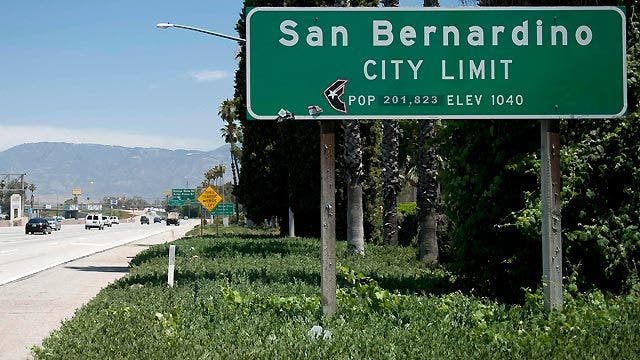
Bankrupt San Bernardino hires new manager for California city


San Bernardino was forced to look for a new city manager after its acting city manager, Andrea Travis-Miller, quit.
Her resignation coincides with the departure of the city's finance chief. Both had been the key officials overseeing the city's bankruptcyapplication and their departures threaten the city's ability to achieve it. They had more knowledge than anybody else of the city's finances and the experience to answer questions from the court and creditors.
The city council voted to hire Allen Parker to replace Travis Miller. According to his resume provided to the city, Parker has been an economic development consultant since 2006.
From June 2001 until December 2006, according to his resume, Parker was chief administrative officer of the Morongo Band of Mission Indians, a federally recognized tribe in California. Before that he was village manager of Maywood, Illinois.
The federal judge overseeing San Bernardino's bankruptcy application said in a court hearing on Tuesday that the new city manager would be confronted with a steep learning curve.
Various creditors are demanding a wealth of financial documents from the city. The city must also produce a detailed bankruptcy blueprint to explain how it intends to deal with its creditors, a key part of proving its eligibility for bankruptcy.
The city council considered two applicants for the job, and voted unanimously to hire Parker.
"Allen Parker brings a wealth of city management experience to San Bernardino," the mayor, Pat Morris said. "I have great confidence in his ability...to guide San Bernardino through the difficult decisions we must make in bankruptcy."
San Bernardino, a city of 210,000 about 60 miles east of Los Angeles, filed for bankruptcy protection on August 1, citing a $46 million deficit for the current fiscal year and little scope to meet its day-to-day expenses. It was the third California city to file for bankruptcy last year, following Stockton and Mammoth Lakes.
The city's biggest creditor, the California Public Employee Pension Fund (Calpers), has opposed San Bernardino's quest to seek bankruptcy protection. Without it, the struggling city will likely face multiple lawsuits in state court for unpaid bills, at a time when its officials say it can barely make payroll.
The city pegs its debt to America's biggest public pension fund at $143 million.
San Bernardino has not made its $1.2 million, twice monthly payment to Calpers since its bankruptcy declaration last August.
No city has ever unilaterally suspended payments to Calpers, which manages pension plans for state government employees and many municipalities and local government agencies around California.
The bankruptcy could be a test case as to whether the pensions of government workers take precedence over other payments in a municipal bankruptcy - a high-stakes issue for pension plans and their beneficiaries, and for the Wall Street bondholders who lend money to governments.
In a statement, Calpers said: "We are very pleased to have Mr. Parker stepping into his new role as city manager of San Bernardino and our executives have already reached out to him personally to welcome him and begin a dialogue with Calpers."