topnav

Home Issues & Campaigns Agency Members Community News Contact Us

Community News

Open dialogue among community members is an important part of successful advocacy. Take Action California believes that the more information and discussion we have about what's important to us, the more empowered we all are to make change.

Showing posts with label CA Legislature. Show all posts

Thursday, June 4, 2015

California anti-profiling bill requires data on police stops

California lawmakers on Wednesday narrowly approved anti-racial profiling legislation ordering unprecedented data collection on police stops, as they grapple with reducing tensions between law enforcement and minority communities.

It was one of dozens of bills considered ahead of a Friday deadline to pass legislation out of one chamber of the Legislature. The Senate also approved an ambitious climate change package that would boost the use of renewable energy to 50 percent in 15 years and slash greenhouse gas emissions.

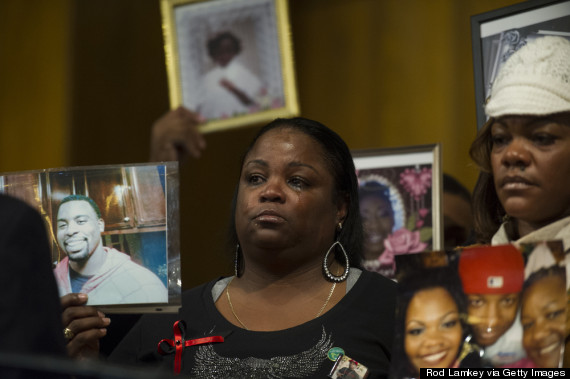
In the Assembly, AB953 barely advanced to require law enforcement agencies starting in 2018 to report a racial breakdown of whom they pull over or question. It is one of few surviving police reform bills introduced in the wake of nationwide protests over police killings of minority men.

AB953's author, Assemblywoman Shirley Weber, said she believed police pulled her over because they thought she was out of place in her own neighborhood. Weber is black.

"When do we stop the cycle? When do we say enough is enough in this country?" the San Diego Democrat said.

Her bill calls for police departments, sheriff's offices and other agencies to write annual reports breaking out the number of stops, the outcomes (such as citations or arrests) and the age and race of those stopped. Law enforcement groups say such data tracking is unnecessary and would distract from keeping communities safe.

Supporters of the bill countered that data collection could end up showing that racial discrimination by police isn't as widespread as believed.

"It will help law enforcement, especially now when the public believes there is something dramatically wrong with their interactions with people of color," said Assemblyman Reggie Jones-Sawyer, a Los Angeles Democrat who leads the Legislative Black Caucus.

Assemblyman Rocky Chavez, R-Oceanside, was the only lawmaker to speak against the bill, saying "labeling police officers as part of the problem isn't helpful."

The bill heads to the Senate after passing 41-23, the minimum needed to advance.

Other police reform legislation has struggled in California this year.

A fiscal panel last week shelved legislation requiring independent investigations of police shootings and an annual report about deaths in police custody. Another bill regulating the use of police body cameras, AB66 also by Weber, is at a standstill over whether officers should be able to review footage before submitting reports about shooting people.

Via: http://www.scpr.org/news/2015/06/03/52189/california-anti-profiling-bill-requires-data-on-po/

Friday, March 20, 2015

Jerry Brown, lawmakers propose $1.1 billion drought relief bill amid increasing tension

With California trudging into its fourth dry year, Gov. Jerry Brown and legislative leaders on Thursday announced $1.1 billion in emergency funding for flood protection and drought relief.

The vast majority of the money – all but about $30 million – was already included in Brown’s January budget proposal, and the measure is similar to a bill package lawmakers approved last year.

But tension over the drought runs higher today than it did then, when Brown first declared a drought emergency and urged Californians to reduce water consumption by 20 percent. This year, California recorded its driest-ever January, and state regulators on Tuesday ordered water agencies to limit the number of days each week customers can water their lawns.

Brown, who said last month that he was reluctant to impose mandatory water restrictions, suggested Thursday that he is open to more stringent measures.

“I’m not going to second-guess (state water regulators), but I would share your urgency that we step it up in the weeks and months ahead,” the Democratic governor said at a news conference at the Capitol.

Brown said, “If this drought continues, we’ll crank it down and it will get extremely challenging for people in California.”

The Legislature is expected to hold votes next week on the drought package, whose passage will allow spending immediately – months before the July 1 start of the next budget year.

The measure includes $272.7 million in water recycling and drinking water quality programs funded by Proposition 1, the water bond voters approved last year.

But the majority of the funding – $660 million – comes from water and flood-prevention bonds voters approved nearly a decade ago, in 2006.

Brown said, “The fact is, these projects take a long time.”

Outside the Capitol, patience appears to be waning.

According to a February Field Poll, 94 percent of California voters consider the drought situation in California “serious,” with nearly 70 percent calling it “extremely serious.” Public support for water rationing, though still just more than one-third of voters, has grown in the past year.

“I think, for the public, an increasingly large proportion is becoming alarmed,” said Mark DiCamillo, director of the poll. “The governor is taking actions which I think make him at least appear to the public that he’s attending to the problem.”

Contributing to the public’s growing concern was a widely circulated editorial in the Los Angeles Times last week in which Jay Famiglietti, senior water scientist at the NASA Jet Propulsion Laboratory, said the state was at risk of running out of water altogether.

“Right now the state has only about one year of water supply left in its reservoirs, and our strategic backup supply, groundwater, is rapidly disappearing,” Famiglietti wrote. “California has no contingency plan for a persistent drought like this one (let alone a 20-plus-year mega-drought), except, apparently, staying in emergency mode and praying for rain.”

Speaking at the Capitol, Senate President Pro Tem Kevin de León said the one-year water supply estimate and the lack of water this year “is creating a renewed sense of urgency.”

He said the drought package “is just the first round” in the Legislature’s effort to address the drought and that “we have much work to do.”

The water bond voters approved last year includes $2.7 billion for storage projects such as dams and reservoirs. Brown said “these are big projects, and I’m certainly looking very carefully at how we can get more storage as quickly as possible.”

Republican lawmakers have been more insistent, seizing on the drought to criticize the lack of water infrastructure investments in the past, as well as the current pace of project approvals.

“I’m calling on the state water agencies, on state government to get projects out of the red tape, to get them moving because they’ve been hung up for decades,” said Assembly Republican leader Kristin Olsen of Riverbank.

Nevertheless, Olsen and Bob Huff, the Republican Senate leader, stood with Brown and Democratic lawmakers for the drought package’s announcement.

Last year’s version was approved by the Legislature with nearly unanimous support, as is expected for this drought package.

Though Republican lawmakers appeared to have no hand in crafting the measure – having only been made aware of it shortly before the announcement – Brown said the Republicans’ support was evidence “we’re doing well.”

He dismissed the timing of their involvement as a “narrative that’s not particularly interesting.”

Still, it made for awkward stagecraft.

After first planning to address reporters after the news conference Thursday, Republican leaders changed course at the last minute to appear with Brown and the Democratic legislative leaders.

Republicans attended their first meetings on the plan Wednesday, and the governor contacted Olsen on Thursday morning, Olsen spokeswoman Amanda Fulkerson said.

She declined to elaborate further on Republicans’ role in discussions.

“I’ll let the governor’s remarks stand for themselves,” Fulkerson said.


DROUGHT RELIEF

Here is how most of the proposed drought funds will be spent:

$660 million for flood management planning and infrastructure improvements, including levee work.

$272.7 million for drinking water quality, water recycling and desalination projects.

$24 million for emergency food aid for people, such as farm workers, out of work due to drought.


Via: http://www.sacbee.com/news/politics-government/capitol-alert/article15381434.html#storylink=cpy

Wednesday, October 1, 2014

California Proposition 48, Referendum to Overturn Indian Gaming Compacts

California Proposition 48, the Referendum to Overturn Indian Gaming Compacts, is on the November 4, 2014 ballot in California as a veto referendum. If signed by the required number of registered voters and timely filed with the Secretary of State, this petition will place on the statewide ballot a challenge to a state law previously approved by the Legislature and the Governor. The law must then be approved by a majority of voters at the next statewide election to go into effect. The law ratifies two gaming compacts (with the North Fork Rancheria of Mono Indians, and the Wiyot Tribe); and it exempts execution of the compacts, certain projects, and intergovernmental agreements from the California Environmental Quality Act. (13-0007).

If the measure is approved by the state's voters, it will:
  • Ratify AB 277 (Ch. 51, Stats. 2013)
  • Ratify two gaming compacts between California and, respectively, the North Fork Rancheria of Mono Indians, and the Wiyot Tribe.
  • Exempt execution of the compacts, certain projects, and intergovernmental agreements from the California Environmental Quality Act.
This measure is a veto referendum; this means that a "yes" vote is a vote to uphold or ratify the contested legislation (AB 277) that was enacted by the California State Legislature while a "no" vote is a vote to overturn AB 277.

Read more about the veto referendum by visiting: http://ballotpedia.org/California_Proposition_48,_Referendum_to_Overturn_Indian_Gaming_Compacts_(2014)

Tuesday, June 10, 2014

Northern California leaders frame their position on water bond

Cynical observers of California politicssometimes assume the real reason for a new statewide water bond is to pay for projects that take water from the north and ship it south. But on Monday, a number of Northern Californialeaders made it clear they are prepared to support a water bond for the November ballot – under certain conditions.

About three dozen politicians and water managers representing the North State Water Alliance convened on the Capitol steps Monday to outline for lawmakers five general principles they believe must guide a water bond. They were joined by several collaborators from environmental and business groups.
The five principles: Existing water rights’ priorities and laws must be maintained; a bond should contribute to sustainable groundwater management; it should strongly emphasize water conservation and recycling; it should include projects to restore critical migratory corridors for salmon and waterfowl; and any money dedicated to new reservoirs should pay for dedicated environmental benefits and enhanced flexibility of the California water system as a whole.
“We have issues related to water that can only be fixed with a water bond, and we need to fix it with this Legislature,” said Bryce Lundberg, chairman of the alliance and owner of Lundberg Family Farms, a major rice-growing enterprise in Butte County. “We’re asking you for your strong leadership and rapid resolve that will move these criteria forward.”
There are currently seven different bond measures proposed in the Legislature that propose varying amounts of public spending on new dams, water conservation and habitat restoration projects. All are intended to replace an $11 billion bond measure approved for the ballot in 2009, but which was twice delayed because lawmakers feared it was too large and too packed with pork-barrel spending.
The Legislature faces a June 26 deadline to place a bond on the November ballot, although it could tweak the rules to delay into late August. A two-thirds vote by lawmakers is required, which means the bond will need bipartisan support.
Given the severe drought gripping California, it would seem an ideal time to offer voters a major water infrastructure bond. But the subject is always controversial because it involves big public debt for divisive projects like new dams.
“What brings us together today is a recognition that negotiations over a state water bond are coming to a head,” said Sacramento Mayor Kevin Johnson, also a member of the alliance. “We want to show our strength in Northern California on this very important issue. This coalition stands ready to be a part of a solution.”
Partners in the North State Water Alliance include the Sacramento Metro Chamber of Commerce, Sacramento Regional Water Authority, Sacramento Area Council of Governments, Mountain Counties Water Resources Association and the Northern California Water Association.


Read more here: http://www.sacbee.com/2014/06/10/6470386/norcal-leaders-frame-their-position.html#mi_rss=State%20Politics#storylink=cpy

Thursday, March 20, 2014

California lawmakers push off college affirmative action bill

California voters will not decide in the 2014 election whether race, gender or ethnicity ought to be considered in college admissions, after lawmakers postponed deliberation on a bill that intends to amend the state constitution.
Spurred by an onslaught of opposition to the proposal, Assembly Speaker John Perez announced Monday that he was sending Senate Constitutional Amendment No. 5 back to the senate — without any action on behalf of the lower assembly — at the request of Sen. Ed Hernandez, D-West Covina, the author of the bill.
Perez said although the bill addressed issues pertinent to most members of the legislature, some lawmakers articulated qualms about the bill’s logistics and its effect on potential college applicants. Certain constituents have expressed concern — for example, some members of the Asian American community worried that the amendment would ostracize them in college admissions.
In response, three prominent Asian American senators — Ted Lieu, D-Torrance; Carol Liu, D-La Canada Flintridge; and Leland Yee, D-San Francisco — wrote a letter last week imploring Hernandez to hold SCA-5 until “he has an opportunity to meet with affected communities and attempt to build a consensus.”
“We felt it was necessary to have a discussion based on facts (before further action),” Hernandez said in a press release.
The proposed amendment seeks to overturn Proposition 209, a 1996 ballot initiative that prohibits the consideration of race, sex or ethnicity in state institutions. Following the passage of Prop. 209, UC Berkeley saw a significant drop in the number of minority students admitted to the university.
If the bill is ratified, the amendment would be placed before voters as a ballot measure. Perez expects that the delay won’t upset the current timeline and that a proposition will be on the 2016 ballot.
“I believe in affirmative action, and I believe it is an important tool to bring diversity,” Yee said. “I don’t want anyone to believe that SCA would negatively impact any community, and I asked (Hernandez and Perez) to have a discussion so that people are all on the same page.”
Hoping to placate anxieties provoked by the measure, Perez called for the creation of a nonpartisan and bicameral task force that will discuss issues related to the comprehensive access to higher education. He intends to include members from all three segments of higher education in California as well as legislators, academics and other key stakeholders.
“It is important that we engage in a very broad conversation … so that we can fully address the issues that our universities are dealing with and give them the tools to expand access and not retract it,” Perez said in a statement.
Some UC Berkeley students have expressed concern about the amendment. In particular, ASUC presidential hopeful David Douglass, who is running with the Defend Affirmative Action Party, doubted the lawmakers’ intent to place the amendment before voters, though he supports affirmative action policies. He debated ASUC Senator Solomon Nwoche about such policies Friday.
Nwoche, who is against affirmative action policies, said that in the long run, the amendment might “actually hurt those students who the campus is recruiting as a whole.”
But representatives from the campus organization REACH! — an Asian Pacific Islander recruitment and retention center — support the measure and think the basis for opposition to SCA-5 is rooted in misinformation.
“There are a lot of misconceptions about SCA-5,’” said Victor Phu, a UC Berkeley junior and REACH! associate director of retention. “(But) Berkeley is engaged in a comprehensive review of admission. We want to take race, sex, ethnicity and sexual orientation into consideration with admissions.”

Wednesday, January 22, 2014

Inland Empire Community Legislative Briefing


Join us this Friday, January 24, 2014
10:00 AM - 12:00 PM
SEIU ULTCW Union Office
195 N. Arrowhead Avenue
San Bernardino, CA

For more information contact Maribel Nunez
(562) 569-4051 or by email mnunez@communitychange.org

Wednesday, January 1, 2014

Resolutions for better politics in the New Year

SACRAMENTO — Forty-five percent of Americans make New Year's resolutions, so I've read. And about 90% of those vows wind up being blown off.
But we're allowed to give it another try every year. It's part of the self-improvement process, a vital acknowledgment of personal flaws.
So in the interest of bettering the species — and nothing personal — I offer some 2014 resolutions for Sacramento politicians. Never mind that I have done this before and generally been ignored.
Gov. Jerry Brown should resolve to:
•Savor and bask in all the media speculation — even if it's a distant reach — about his possibly being tempted to run for president in 2016. For the fourth time.
At his age — he'll be 78 during the next presidential election — and after those earlier, ill-conceived stabs at the job, to even be mentioned is an achievement and honor. Soak it in. Smell the roses.
But Brown knows better than to take the chatter seriously. These are slow times in the news biz and political writers are scraping for anything to keep busy. He understands. Presumably.
•Be more considerate. But this seems hopeless.
Case in point: Brown continues to refuse to speak to the Sacramento Press Club, as previous governors routinely did, promoting their agenda for the coming year. It was always a sold-out luncheon for a good cause: refunding the club's scholarship program for college journalism students. This governor doesn't even bother to respond to the club's invitation.
It's not that he's too busy doing the people's work. He takes time to address special interests and rich supporters with his hand out for money to finance his 2014 reelection campaign.
Here I interrupt with a proposed resolution for fellow news types:
•Stop writing and broadcasting that Brown hasn't announced whether he'll run for a fourth term. When he's begging donors for millions to fund the race, that's enough announcement. That's running.
Back to Brown resolutions:
•Seriously rethink two potential behemoth boondoggles — the bullet train and delta tunnels — before the state gets in so deep it can't escape.
The bullet train has a $68-billion price tag with only $12 billion in sight. That's fiscally irresponsible.
The delta project is priced at $25 billion — but could soar to $60-billion-plus with interest on borrowing — and involves tearing up a garden spot to water a desert. More creative thinking is needed.
Now resolutions for legislators:
•Pass fewer laws. Address only legitimate state problems, rather than merely pumping out fodder for press releases. Each bill costs $20,000 on average to process.
The lawmakers regressed in 2013. They passed 901 bills, according to the governor's office. Brown signed 805 and vetoed 96. That's up from 2011, a comparable year in the legislative cycle. That year they passed 889. The governor signed 761 and vetoed 128.
•Conduct more of the public's business in the public light. Longer committee meetings with more public testimony. Fewer sneaky "gut-and-amend" shenanigans at the end of legislative sessions.

Tuesday, December 31, 2013

California Stood Up For Immigrants, Transgender People In 2013

2013 was a big year for the rights of immigrants, workers, women and children in California. The most populous state in the nation, led by Gov. Jerry Brown (D) and a Democratic supermajority in the state Legislature, California this year passed groundbreaking laws that bucked the national trend of restricting abortion rights, rebuked the federal government's aggressive deportation program and led the country on workers' rights.
But 2014 is going to be even better -- that's when the laws start going into effect. Take a look at some of California's landmark laws from this past year below.

TRANSGENDER RIGHTS
In a nationwide first, transgender students in California will be able to choose which restrooms they want to use starting in January. They will also be able to choose between boys' and girls' sports teams.
California is the first state to enact these policies as a state law, but the groundbreaking legislation, which goes into effect Jan. 1, could be suspended within days if opposition groups gather enough signatures to test the law before voters on the November ballot.
PAPARAZZI REFORM
Paparazzi photographers who harass and intimidate celebrities and their children will face stiffer penalties under a new law passed in 2013: a fine of up to $10,000 and up to a year in county jail. Victims can also sue for damages and attorney's fees, according to the Associated Press.
Before the bill passed, celebrity moms Halle Berry and Jennifer Garner joined forces to deliver some emotional testimony about how aggressive photographers regularly frighten their children.
"My 17-month-old baby is terrified and cries," said Garner during the August hearing. "My 4-year-old says, 'Why do these men never smile? Why do they never go away? Why are they always with us?'"

ABORTION RIGHTS
California's new law authorizes nurse practitioners, certified nurse midwives and physician assistants to perform aspiration abortions during the first trimester.
California joins Oregon, Montana, Vermont and New Hampshire in allowing nurse practitioners to perform early abortions, the AP reported. In 2013, California was the only state to enact a law expanding abortion access, The New York Times noted.
Legislators also strengthened an existing law that makes it illegal to damage or block access to abortion clinics, the AP reported.
MINIMUM WAGE
California's minimum wage will go from $8 an hour to $9 in July, and it will reach $10 an hour by 2016. California joins 12 other states that are raising their minimum wage in 2014.

TEXTING LOOPHOLE CLOSED
A legislative loophole made it possible for teens to use voice commands like Apple iPhone's Siri to text while driving, and California's lawmakers closed that loophole this year. Adults will still be able to use the hands-free texting feature while driving.
Teens have been banned from using cell phones on the road since 2007, but an apparent loophole opened up in 2012 when legislators passed a bill allowing drivers to use hands-free devices to send text messages and perform other functions, according to the AP.
GUN SAFETY LAWS
California already has some of the strictest gun laws in the country, but lawmakers cracked down even further with laws that strengthen assault weapon permit requirements, require licensed psychotherapists to tell police about patients who threaten violence against others, and make it illegal to purchase gun parts that convert firearms into assault-style rifles.
The bills were written in reaction to mass shootings across the country, including the December 2012 Sandy Hook Elementary School shooting in Newtown, Conn. In contrast, the federal government hasn't been able to pass any gun safety laws since the Newtown massacre.

DOMESTIC WORKERS BILL OF RIGHTS
California joined New York and Hawaii in creating statewide protections for domestic workers in 2013. California's law allows domestic workers like nannies and personal health care aides to claim overtime wages for more than nine hours of work a day or 45 hours of work a week.
The law is expected to affect about 100,000 workers, but it's only temporary --legislators will have to vote on whether to renew the law in 2017, KPCC reported. It's also a pared-down version of the bill that was originally proposed in 2011, which included meal and rest breaks.
IMMIGRATION REFORM
The federal government is stalling on immigration reform, and Gov. Jerry Brown made it clear that California isn't going to wait around any longer. Brown signed into law a group of bills this year to protect undocumented immigrants, the most significant of which is the Trust Act.
The Trust Act limits local police's cooperation with the Department of Homeland Security's Secure Communities, a federal deportation program that asks police departments to screen arrestees for immigration status and hold them for the feds if they're found to be undocumented. So far, Secure Communities has deported 100,000 Californians, most of whom did not have a serious criminal record, the Los Angeles Times reported, but the new law will require people to be charged with or convicted of a serious offense before being held for possible deportation by the feds.
Starting in 2015, California's undocumented immigrants will also be able to apply for driver's licenses. California joins Illinois, Colorado, Nevada, Maryland, Connecticut, Oregon, and the District of Columbia in passing the driver's license legislation in 2013, MSNBC reported. New Mexico, Washington and Utah also allow undocumented immigrants to apply for driver's licenses.

Monday, August 26, 2013

Legislature OKs bill to let noncitizens serve on California juries

SACRAMENTO — Legal immigrants who are not American citizens would be able to serve on juries in California under a bill that lawmakers sent to Gov. Jerry Brown on Thursday.
The measure joins a proposal already on the governor's desk that would also allow legal permanent residents to serve as poll workers in California elections.
The bills are among a handful that would expand immigrant rights in California and have sparked rancorous debate in the Legislature.
Immigrants "are part of the fabric of our community," Assemblyman Bob Wieckowski (D-Fremont) said during the floor debate Thursday. "They benefit from the protections of our laws, so it is fair and just that they be asked to share in the obligation to do jury duty."
Republicans opposed the measure, which passed the Assembly with a bare majority. The Senate approved the bill Monday.
"I do think there is something called the jury of your peers," countered Assemblyman Rocky Chavez (R-Oceanside). "Peers are people who understand the nuances of America."
He noted that some immigrants come from countries where suspects are guilty until proven innocent and where people are taught to obey authority, not question it.
The bill, AB 1401, was authored by the Assembly Judiciary Committee, which seeks a way to expand the pool of eligible jurors in California.
Assembly Speaker John A. Pérez (D-Los Angeles), who has said that non-citizens facing trial deserve a jury of their peers, supported the measure. He characterized it as the latest reform to a system that once barred non-whites and women from jury service.
"Really, it's about making sure that we uphold the standards of our justice system and make sure everybody is afforded a jury of their peers," Pérez said at a legislative hearing.
The other measure would reduce the time and expense that elections officials need to recruit poll workers and provide more bilingual services, according to Assemblyman Rob Bonta (D-Alameda), its author.
There are 3 million Californians who are eligible to vote but who are not proficient in English, Bonta said.
"We have a shortage of multilingual poll workers in California," he said. "There must be language access for voters at the polls, and that's what this bill provides."
Republicans said the bill could affect the integrity of the election process.
"Allowing people who are not actually eligible to vote to work in the polling places, I believe, would be a grave mistake," said Assemblyman Tom Donnelly (R-Twin Peaks). "The net effect is going to be to undermine the confidence that the citizens of California have in their election process."
Added Assemblywoman Diane Harkey (R-Dana Point): "Something doesn't smell right to me."
Assemblyman Luis Alejo (D-Watsonville) called such comments offensive. If non-citizens can serve in the military and die for this country, they ought to be able to work at the polls, he said.
The measure would allow up to five non-citizen workers at each polling place. It would continue the requirement that poll inspectors, who supervise and protect elections, be citizens.
The National Assn. of Latino Elected and Appointed Officials Educational Fund and the Asian Pacific American Legal Center proposed AB 817.
"Limited English speaking voters struggle to cast their ballots when bilingual poll workers are unavailable to assist them," said Eugene Lee, voting rights project director at the legal center.
Lawmakers also sent Brown a bill Thursday that would bar law enforcement agencies from requiring a person to show proof of legal residency to obtain a crime report. Assemblywoman Susan Talamantes Eggman (D-Stockton) authored the measure, AB 1195.
Other bills that went to Brown would:
— Allow counties to increase vehicle registration fees from $1 to $2 to fund anti-theft programs (AB 767 by Assemblyman Marc Levine, a Democrat from San Rafael).
— Increase the penalty for those convicted of making false 911 calls, a prank called "swatting" because it aims to draw out heavily armed SWAT teams, often to the homes of celebrities (SB 333 by Sen. Ted Lieu, a Democrat from Torrance and a swatting victim). Those convicted would be responsible for the full cost of the police response, which could be $10,000 or more.
— Prohibit the sale of animals at swap meets and flea markets unless the city or county adopts minimum animal care and treatment standards to prevent inhumane treatment and consumer fraud (AB 339 by Assemblyman Roger Dickinson, a Democrat from Sacramento).