topnav

Home Issues & Campaigns Agency Members Community News Contact Us

Community News

Open dialogue among community members is an important part of successful advocacy. Take Action California believes that the more information and discussion we have about what's important to us, the more empowered we all are to make change.

Thursday, July 18, 2013

Of Primary Concern: Immigration Reform Could Get New Life In 2014


WASHINGTON -- The consensus across the political spectrum is that GOP leaders would prefer to see comprehensive immigration reform passed, but rank-and-file House Republicans are reluctant to back any proposal that grants a pathway to citizenship, because doing so is the quickest route to a primary challenge from the right. That dynamic, it's said, will mean a long, slow death for reform.
But the pessimism around immigration reform misses a key difference between 2013 and 2014. The general election won't be until November 2014, but primaries are held in the spring and summer. The deadlines to get on the ballots for those primaries often come months earlier, meaning that at some point in 2014, the chance of a surprise challenge from the right goes to zero for all House members.
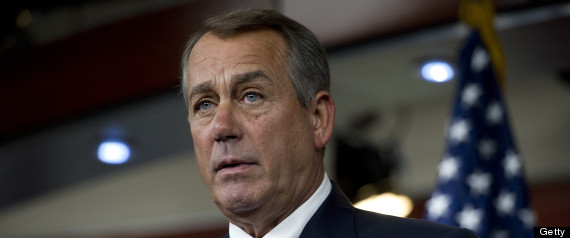
Far from being the death of immigration reform, some think the election year could breathe new life into the effort. The House will undoubtedly recess for August without passing an immigration bill; House Speaker John Boehner (R-Ohio) told his conference last week they would focus on Obamacare, the IRS and gimmicky votes on government conference spending and public salaries.
The recess could very well jack up pressure on opponents of reform, as the most die-hard tea party activists make their voices heard at town halls -- a forum ripe for verbal challenges to incumbent members of Congress. That pressure to move even more right on immigration could further entrench tea party-backed congressmen, but it could also fuel the efforts of reform supporters. The potential less-than-politically-correct rants -- some from members of Congress themselves -- inevitably will make their way to YouTube, providing fodder for pro-reform activists who will use the clips to draw attention to their cause.
The fury already emanating from the Latino establishment and community in general over inaction on immigration reform will only heighten as the 2014 elections draw closer. Last week, Univision's Jorge Ramos, known as the "Walter Cronkite of Spanish-language media," lashed out at Boehner, comparing him to Arizona Sheriff Joe Arpaio. It was perhaps the harshest insult that can be thrown around on that network, which for the last two weeks has been the most-watched channel in any language in the U.S. in the key 18-49 age demographic.
There will be scant opportunity for immigration reform in the fall, as a looming government shutdown, the approach of the debt ceiling and the festering sequester will combine to force themselves onto the agenda. In Congress, the fall quickly turns to Thanksgiving recess, which gives way even quicker to the Christmas break. And then it's 2014.
Sometime in the fall or early winter, the Republican-majority House is likely to pass some sort of legislation that toughens border security but includes no pathway to citizenship. Some conservative members are worried about passing any bill -- even if they support it -- because of the possibility it could go to conference committee and be combined with a Senate bill that would allow undocumented immigrants to eventually become citizens. But that concern doesn't seem to be the majority view, and House leadership expects to pass something to deal with immigration, even if not comprehensive reform.
If conference committee negotiators take several months to merge the small House bill with the comprehensive Senate bill, the House wouldn't be asked to vote on it again until next spring or summer -- by which point it will be too late for challengers to launch primary campaigns.
The bipartisan group Third Way, which supports reform and believes 2014 could be the year, has mapped out the filing deadlines for Republicans who are being targeted by advocates as potential supporters of a comprehensive bill. If House members vote on immigration reform after Dec. 9, there will be 10 Texas Republicans whom advocates believe to be persuadable who could be off the hook for a primary. California, where reform supporters hope to pick up 11 GOP members, has a primary filing date of March 7. In sum, there are 38 targeted Republicans -- including Boehner -- who will know by mid-March whether they have a primary challenger.
Only about half of those safe, gettable Republicans need to vote aye to get a simple majority in the House, assuming roughly 200 Democrats vote for passage.
The scenario laid out above is far from the most likely, according to many working on reform efforts. One advocate called the entire line of thinking "bananas," and most proponents, from Obama to lawmakers, have said reform must be done in 2013 or may not happen at all. Republican leadership aides have downplayed the possibility of passing comprehensive reform, though it's impossible to say whether they truly believe immigration reform is dead or are just talking it down to give Boehner more elbow room.
But Lanae Erickson Hatalsky, politics director for Third Way, said supporters of immigration shouldn't necessarily lose hope if there is a drawn-out process.
"There is a significant chunk of House Republicans that want to see something done on this, and the only thing that's holding them back is the fear of a primary challenger," she said. "So the closer we get to these dates and the less likely that primary challenger is to pop up unannounced, the easier it is for them to have their shackles off and do what they really think they should do for the party and for themselves."
Tamar Jacoby, working on behalf of reform for the pro-business group Immigration Works USA, said that the hypothetical timeline "[c]ould turn out to be right, or could be even later -- after another big Latino turnout in November 2014."
"But I'm not giving up on this year yet -- we have no idea yet where most members stand on the issues. I think the conventional wisdom is too pessimistic," he said.
If the House prefers to sidestep the immigration issue as the election approaches, they could come back and pass a bill during the lame duck session -- a period that has seen it's fair share of major legislation move through, including, as the recent movie "Lincoln" portrayed, abolition of slavery. Republicans who voted for "amnesty" in 2014 or in a lame duck wouldn't have to worry about a primary challenge until 2016. By that time, the radioactivity of the issue may have lessened. In 2007, Fox News drove conservative anger at reform efforts. This time around, many influential conservatives support reform, including media mogul Rupert Murdoch, who owns Fox.
So tweeted Rupert Murdoch on Sunday night:
If the immigration issue has a shorter radioactive half-life than people expect, it might be old news by 2016 in some districts, as people look around and realize the sky didn't fall.


via HuffPost

Wednesday, July 17, 2013

An autism treatment lost in California's shift from Healthy Families


SACRAMENTO — Evan Kim was 2 years old when he was diagnosed as autistic last year, and his parents searched for some way to curb his head-banging tantrums.
Using a state-financed healthcare program for low-income families, they found therapists who could provide a specific kind of autism treatment aimed at analyzing and improving behavior. The therapists spent 40 hours a week with Evan at the family's home in the Los Angeles area, coaxing him to stop the tantrums and improving his communication skills.
Evan's mother, Jenny Kim, was relieved — until last month, when her children's healthcare plan changed and the therapy, known as applied behavior analysis, was no longer covered.
"I'm afraid he's not going to make any progress from now on," Kim said. The same service, she said, would cost $10,000 a month out of pocket.
Evan's therapy was a casualty of the state's effort to phase out its Healthy Families insurance program and shift the nearly 900,000 children it covered into Medi-Cal, the broader healthcare program for the poor. Despite officials' assurances that the transition would not jeopardize services, activists say hundreds of children are losing coverage for applied behavior analysis.
"Those are the families that fall through the cracks," said Julie Kornack, a public policy analyst at the Los Angeles-based Center for Autism and Related Disorders. "If they don't get the treatment they need, they won't be contributing members of society. And everyone will have to pay to take care of them."
Activists fear that other coverage gaps could surface as the state prepares to move the final 150,000 children into Medi-Cal in the next two months. Elizabeth Abbott, an official at the advocacy group Health Access, said she worried that dental resources could also become strained.
"This is potentially the tip of the iceberg," Abbot said.
Rene Mollow, a deputy director at the California Department of Health Care Services, said the transition has been mostly smooth. She said some children can get similar autism therapy through a federal program or local school district, but she conceded that those services won't be available to everyone.
Lawmakers agreed to eliminate Healthy Families last year as a savings measure pushed by Gov. Jerry Brown, but the money hasn't materialized the way the administration had hoped. The state saved only one-fifth of the $13.1 million it had projected in the fiscal year that just ended.
Administration officials say that's the result of delays, increasing healthcare costs and other factors.
Senate leader Darrell Steinberg (D-Sacramento) pushed to restore coverage for applied behavior analysis for children with autism in the state budget that went into effect last Monday. However, the $50 million was not included in the budget that lawmakers sent Brown last month.
"The administration promises us a resolution, but we don't have one yet," Steinberg said.
Mollow said the Brown administration was concerned about the cost as the state emerges from a years-long budget crisis.
"We're coming out of a significant deficit," she said. "We're just looking to be prudent with the dollars that we have."
Applied behavior analysis is an intensive treatment in which therapists use positive reinforcement to improve a child's behavior and detailed instructions to make learning new tasks easier. It is used to teach a child, among other things, how to get dressed in the morning and play well with others.
Brown expressed skepticism of the therapy when he signed a 2011 bill requiring many private insurers — but not Medi-Cal — to cover applied behavior analysis.
"There are remaining questions about effectiveness, duration and the cost of the covered treatments that must be sorted out," he said in a statement.
Autism experts disagree, saying the therapy can be costly but is vital.
"They're taking away the only scientifically proven treatment for children who have a very significant medical condition," said Jonathan Tarbox, director of research and development at the Center for Autism and Related Disorders. The center provides applied behavior analysis through state-funded programs.
Patrick Sullivan of San Diego said his 6-year-old autistic daughter, Naia, has benefited dramatically from applied behavior analysis.
Sullivan said a state employee assured him earlier this year that his daughter's transition to Medi-Cal would be "seamless." Later, he learned that her therapy would no longer be covered at the end of this month.
Sullivan hopes his daughter can receive treatment at one of California's regional centers that provide services to the developmentally disabled. But Naia's autism, he said, may not be severe enough for her to qualify, or the amount of therapy she receives could be sharply reduced.
"I don't know what's going to happen," he said.

It's a crime to house the mentally ill this way

July 17, 2013, 5:00 a.m.


If you routinely hear voices, hallucinate, sink into suicidal depression or suffer inescapable torment, Los Angeles has a place for you.

The county jail.

On Monday, the jail held 3,200 inmates diagnosed with a mental illness and accused of a crime. Most have not been to trial, many have waited months for their day in court, and the majority have cycled through at least once before. There's no longer enough room to house them all in segregated areas, so 1,000 mentally ill men and 300 women are housed with the general population.

Sheriff Lee Baca has said for decades that he runs the nation's largest mental hospital, but we've heard it so often that the shock has worn off. We know there's something inexcusably wrong with the system — something backward and inhumane. But we shrug and move on, and the failure of public policy persists, at great public expense, while Los Angeles County officials order up another round of studies.

On the seventh floor of the Twin Towers, some of the most severely ill men stood in the locked single cells of a dorm-style bloc Monday, staring into space, banging on walls or howling. On the fifth floor, cells were filled to capacity and bunks were squeezed into the common dining area to handle the overflow. Some of the bunks are two beds high, some three. Privacy and quiet do not exist for inmates or their jailhouse therapists.

If you're trying to figure out what makes for a desirable therapeutic environment, said Sara Hough, who runs the jail clinical program for the county Mental Health Department and takes pride in trying to deliver desperately needed care, "this ain't it."

County sheriff's Sgt. Julie Geary pointed out an inmate who thinks that he's Abraham Lincoln and that he's possessed by a spirit. Nearby was a man who's been in and out of jail so many times, Geary is on a first-name basis with him. "You're back," she recalled telling Herman. And she knows which inmates can be expected to complain that poisonous gas is being piped into their cells.

On the fifth floor, a 49-year-old inmate squatted and spoke to me through a small opening in a locked door. He was diagnosed with paranoid schizophrenia as a young man, he said. I asked how many different times he's been in jail since then.
"About 15," he guessed.

And the total amount of time he's been locked up?

"Sir, to be honest with you, about 27 years."

While I spoke to him, another middle-aged man kept gesturing through a window that he wanted to talk, too.

"Sir," he said, "I'm just trying to get into a drug program."

He rattled off a list of diagnoses he's received, including bipolar disorder and schizoaffective disorder. Like the 15-timer, he's been in jail so many times he could only guess at the number.

"About 10," he said.

Clearly, locking these men up over and over again isn't working, and it isn't cheap. But it's what the system has been doing for years in Los Angeles County and in jails and prisons across the country.

Therapists know it. Judges know it, because they see the same offenders churn through their courtrooms, many of them for drug possession and minor offenses in which the underlying cause is often a mental illness. And jailers surely know it, though the problem is not of their making or of any other single agency's.

"We're on the same page here," sheriff's Cmdr. David Fender said Monday when I met with him and mental health officials at the jail. "The entire leadership" of the Sheriff's Department "believes we've got to do something about this."

No doubt, so what's the plan?

The county Board of Supervisors is pushing ahead, after years of delay, with plans to update jail facilities in hopes of fending off possible federal intervention following myriad reports of inmate abuse and deplorable conditions. Earlier this year, the supes hired a consultant to make proposals for demolishing the dungeon-like Men's Central Jail, building a new facility in its place and updating other detention centers. At Tuesday's board meeting, five proposals were aired, including construction of a jail devoted entirely to inmates with medical and mental health problems.

But would that be a new direction, or the same failed strategy in a new and improved building? Even when inmates get counseling and meds in jail, the majority of them leave with no long-term recovery plan or supervision on the outside, so guess where they end up.
The costs of the proposals ranged from $1.32 billion to $1.62 billion, and no doubt some upgrades are needed. But several dozen demonstrators at the meeting called for no new jails, and many of them stepped to the mike to demand a greater investment in steering people out of detention.

One of the speakers, Marsha Temple, cited an earlier study recommending community treatment centers rather than incarceration for many of those with mental health problems. She points out that permanent supportive housing and treatment would offer a far better chance at recovery, and would cost a fraction of what it takes to throw someone into a jail cell.

"Why are we locking up people who are mentally ill?" Temple asked me rhetorically Tuesday afternoon, her tone suggesting the practice is nothing short of barbaric. And she said declining birth rates and crime rates make her fear that more jail space will lead to more warehousing of those who ought to be in treatment rather than in jail.

Temple runs the L.A. nonprofit Integrated Recovery Network, which contacts inmates before their release, then follows them back out with supportive services like housing assistance, job training and mental health counseling. But her group can handle only a fraction of the need. Temple has been strategizing with judges, attorneys and treatment providers to push for similar services at the time of arraignment, with the goal of avoiding incarceration altogether, particularly for nonviolent offenders.

That's already being done on a small scale, with the county's Homeless Alternative to Living on the Streets program. But 3,200 people with a mental illness are behind bars (17% of the jail population).

That's shameful, and once you've looked into their eyes, you're haunted by the conviction that many of them are serving time for the crime of being afflicted. If the supervisors have trouble finding the will to do right by such a vulnerable, stigmatized population, maybe they should take one more tour of the nation's largest mental hospital.

steve.lopez@latimes.com

Copyright © 2013, Los Angeles Times


California health centers receive $21.9 million in federal grants


The LifeLong Medical Care center in Berkeley has received $236,826 in federal grants to help enroll uninsured patients in new health care coverage options.
On Wednesday, Kathleen Sebelius, secretary of the U.S. Department of Health and Human Services, announced $150 million in grants for health centers nationwide, $21.9 million of which will go to 129 California health centers to assist Americans in exploring insurance options made available by the Affordable Care Act.
According to Linda Collins, patient services manager at LifeLong Medical Care, the center is planning to use the funding to hire new outreach and enrollment staff members. The center expects to add seven new staff members to the current team of 12, and they will be involved in enrollment and outreach.
As part of its outreach efforts, the LifeLong Medical Care center will meet the community at churches and schools as well as host events and collaborations with statewide partners.
Collins said that LifeLong Medical Care currently serves more than 30,000 patients and intends to increase the number of patients by at least 6,000 by the end of the enrollment period in March.
LifeLong Medical Care has helped many Berkeley residents over the course of 37 years with a variety of services.
“They had a class on smoking,” said Johnnie Mae Poindexter, a 93-year-old patient at LifeLong. “They helped me to quit smoking. I smoked for 53 years.”
Health centers across the nation aim to enroll 3.7 million people with the help of 2,900 additional workers. In California, health centers are expected to hire 411 additional workers with the grants and enroll 575,863 residents, Sebelius said.
According to the Department of Health and Human Services, health centers in California served 3.2 million patients last year, and 42 percent were uninsured.
“With these awards, consumers will get help understanding their coverage options through the new Health Insurance Marketplace, Medicaid and the Children’s Health Insurance Program (and) determine their eligibility and what financial help they can get, so they can enroll in new affordable health care options,” said Martin Kramer, director of communications for the Health Resources and Services Administration, in an email.
The HRSA announced the availability of funds in May and accepted applications from health centers. 1,159 out of 1,200 health centers were awarded grants.
“These awards are one piece of the enrollment effort,” Kramer said in the email.
Yolie Gamble, clinic director at the LifeLong Medical Care center in West Berkeley, said that many patients were currently unaware that they could be treated and have the costs covered.
“More patients will know they have coverage and feel they’re not going to go into huge debt,” Gamble said. “I think it’s opening up people’s eyes.”
Contact Somin Park at sominpark@dailycal.org.

Tuesday, July 16, 2013

After years of reform, California education schools fall short on new ranking system

California has been trying to reform how it educates teachers for more than a decade, and some of its ideas have become a model for the rest of the country. But the vast majority of teacher preparation programs in California are still failing to adequately prepare teachers, according to a controversial new report released Tuesday that rated more than 1,200 schools of education across the nation.

The ratings, compiled by U.S. News and World Report and the National Council on Teacher Quality (NCTQ), a pro-accountability advocacy group, are part of an effort to spur improvements in teacher quality. The hope is that if education schools are pushed to do a better job of preparing teachers in the first place, the country can solve many of its academic problems.


“We have scratched an inch deep into the surface of these programs. Just going that deep we find fundamental flaws and weaknesses,” said Kate Walsh, NCTQ’s president. “I wonder if you went a lot deeper what you would find.”
Education schools across the country fared poorly, but California, which is among the top six producers of teachers in the nation, was identified as one of the three worst states at training teachers. Ninety percent of the state’s elementary education programs included in the review received the lowest rating possible.
The ratings left schools of education reeling. Some of the nation’s biggest producers of teachers, like Illinois State University and the California State University system, were rated poorly on the review’s scale of zero to four stars.
The ratings were based on standards such as how the program teaches classroom management and whether it prepares teachers for the new Common Core State Standards. For the 162 programs identified as the weakest in the nation, the common thread was low admission criteria and poor student teaching requirements.
But critics say that had NCTQ dug deeper, the group might have made different conclusions.
“Unfortunately, the answer to the question of what we can learn about teacher education quality from the NCTQ report … is ‘not much,’ ” said Linda Darling-Hammond, a professor of education at Stanford University and chair of the California Commission on Teacher Credentialing, in a statement. “Without reliable data related to what programs and their candidates actually do, the study is not useful for driving improvement.”
In particular, Darling-Hammond said, the report did not accurately reflect the results of ongoing reform efforts in California.
In 1998, the state passed an ambitious law aimed at improving teacher preparation. The law allowed for multiple ways for teachers to earn a certificate and required that aspiring teachers take a performance test—which includes videotapes and extended essays—to prove they are ready to teach. One of those tests is the model for a new national exam adopted by 25 states.
Still, educators at some of California’s most popular schools of education have admitted there is little data showing their programs are any better. Some aspects of teacher preparation, like student teaching, still vary greatly by program and the state cut score for program admissions is low, just 123 out of a top score of 240 on a basic skills test.
The release of the rankings has many questioning how to evaluate teacher preparation programs, and if it is even possible.


The best way, some experts and teacher educators say, is to examine how students perform once a graduate enters the classroom. The NCTQ report was unable to include student achievement data in its ratings, except for in one case, because not enough states collect it.
“Until we have a system that gives us data and evidence of what’s going on, all we have are perceptions of people saying colleges and schools of education aren’t doing a good job,” said Karen Gallagher, dean of the education school at University of Southern California in a February interview.
But gathering that information—which is usually based on student test scores—is difficult and fraught with problems.
Instead, NCTQ used information like course syllabi, textbooks, and admissions requirements. They requested information from 2,400 programs in 1,130 institutions, but only 1,200 programs provided enough data to receive a complete program ranking. Schools in at least five states refused to hand over information until forced to by open-records requests.
In a July 2011 letter to NCTQ, former chancellor of California State University, Charles Reed, questioned whether the data collected was a “valid approach for drawing conclusions about program quality and effectiveness.”
Walsh has defended NCTQ’s methods, and insisted that the review’s methodology was fair and unbiased.
The California State University system, which has educated 8 percent of America’s teachers in the last decade, received relatively low rankings, with 18 of its 39 programs receiving the lowest rating possible. The remaining 20 received a score between one and two-and-a-half stars.
On Tuesday, the executive vice chancellor of California State University, Ephraim P. Smith, said the system’s teacher preparation programs “have long been recognized for their innovation and excellence,” and pointed to a recent federally-commissioned report that highlighted the school’s work.
Although experts across education agree that teacher preparation must be improved, many doubt that the ratings will actually help.
Randi Weingarten, president of the American Federation of Teachers, a national teachers union, lambasted the review. “It’s disappointing that for something as important as strengthening teacher preparation programs, NCTQ chose to use the gimmick of a four-star rating system without using professionally accepted standards, visiting any of the institutions or talking with any of the graduates,” Weingarten said.

Monday, July 15, 2013

A brighter outlook for higher education in California


By Nicholas B. Dirks

Under the leadership of Gov. Edmund G. "Pat" Brown and University of California President Clark Kerr, the 1960 Master Plan for Higher Education in California created a unique three-way collaboration between the university, the public and the state, a partnership that propelled the state to the forefront of scientific discovery, the arts, innovation and economic growth. At the core of that partnership was the idea of access. As Kerr noted, it was the first time in history "that a state or a nation would promise there would be a place ready for every high school graduate or person otherwise qualified."
As I begin my tenure as UC Berkeley's new chancellor, I am struck by the legacy of the Master Plan, made palpable in powerful stories students and alumni tell of how UC has touched their lives, serving as the inflection point for their intellectual formation, their social and cultural awakening, their emergence as political citizens and their preparation for careers. Many talk in particular about how a Berkeley education led them to believe in the importance of public service, with a strong commitment to changing the world for the better.
These stories confirm my belief that higher education is both a private and public good, and that we all have a great deal at stake when it comes to ensuring that the cost of attendance never stands between prospective students and access to our best colleges. By the same token, maintaining such access is a responsibility that must be shared by institutions of higher education and government.
That is why I applaud the California Legislature and the leadership of Speaker John A. Pérez for the bold effort to make UC and California State University attendance far more affordable through the new Middle Class Scholarship Plan. The plan will reduce tuition costs by 10% to 40% for students from families with household earnings between $100,000 and $150,000.
This legislation, along with the passage of Proposition 30 and a state budget that begins to reinvest in public higher education, acknowledges what is clearly true: The benefits of a college degree extend well beyond the individual student.
In fact, there may be no better investment of public funds. A study by the Federal Reserve Bank of Boston found that states get back about $7 for every $1 they invest in higher education. And yet not all of the public benefits derived from a well-educated population can be so quantified. The collective vibrancy of California's economy and culture relies on the ability of UC to maintain its position among the greatest schools in the nation, and on the state's commitment to making higher education available to more than the privileged few.
For our part, university administrators will continue to focus on supporting crucial financial aid programs, as finances allow. Across the UC system, students whose families earn less than $80,000 a year already have their tuition and fees fully covered. In addition, Berkeley took a leadership role on the affordability front in 2012 with the Middle Class Access Plan, the first program at a public university to extend financial aid to families with total annual income ranging from $80,000 to $140,000. Under this plan, the university guarantees that parents with income in this range and typical assets will not need to contribute more than 15% of their total income toward the annual cost of a Berkeley education. We expect the state's new program to complement Berkeley's, resulting in even greater assurance that middle-class students will be able to afford a Berkeley education.
The cost of accessing the high-quality educational opportunities afforded by the Master Plan has grown significantly in recent years, not least because of changing patterns of state support for higher education. At the same time, every campus has worked hard and successfully to reduce administrative costs and direct the savings to the academic core. But it requires significant resources to support the intensive teaching environment and the high levels of excellence in research and scholarship we have achieved. It is clear that significant increases in support for our colleges and universities will be crucial for the future health not only of these institutions but of our state.
After years of financial challenges that have frayed the ties that bind us together, it is cause for celebration to see voters, legislators and university administrators united again in support of the promise of the Master Plan and a shared commitment to higher education. While more will be required of us all to ensure that our public colleges and universities rest on sustainable financial foundations, the renewed recognition of our deeply shared interests in the widest possible access to higher education gives me real hope for our collective future.
Nicholas B. Dirks, the former executive vice president and dean of the faculty of arts and sciences at Columbia University, began his tenure as chancellor of UC Berkeley in June.


via LA Times

Thursday, July 11, 2013

Feds grant $21.9 million to California health centers to help enroll uninsured

The U.S. Department of Health and Human Services awarded $21.9 million to 129 California health centers to help enroll uninsured residents in the Covered California health benefits exchange or determine their eligibility for Medi-Cal and other programs, officials said Wednesday.

Those health centers, which cumulatively operate more than 1,200 clinics statewide, saw nearly 3.3 million patients last year, HHS said, 42 percent of whom were uninsured.

The new funding is expected to help grantees hire more than 400 additional workers, and (the feds hope) enroll roughly 575,000 Californians in Covered California or other affordable options.

Nationally, the Obama Administration is making $150 million in such grants to 1,159 health centers, HHS said July 10.

via Bizjournals.com