topnav

Home Issues & Campaigns Agency Members Community News Contact Us

Community News

Open dialogue among community members is an important part of successful advocacy. Take Action California believes that the more information and discussion we have about what's important to us, the more empowered we all are to make change.

Friday, September 21, 2012

California job growth slows in August, employers add 12,000 jobs


California's jobs engine slowed in August, with state payrolls growing by a meager 12,000 jobs, the 13th straight month of net job gains.

The jobless rate dipped slightly to 10.6% in August, down from 10.7% the month before, according to data from the state's Employment Development Department.

At the start of the summer, the state was adding jobs at a brisk pace, much faster than the nation as a whole. But with July's gains revised downward to 17,900 and August's tepid growth, economists said the slowing U.S. and global economy are beginning to affect California.

"Employers are worried about the slowdown in Asia and Europe," said Esmael Adibi, director of Chapman University's A. Gary Anderson Center for Economic Research. "They're taking a wait-and-see attitude" before hiring, he said. 

Employers across several industries added jobs, with education and health services posting the largest over-the-month increase with 8,900 jobs. The beleaguered construction industry, buoyed by growth in multi-unit housing projects, posted a gain of 5,100 jobs. The leisure and hospitality industry added 4,400 jobs.

Those gains, were offset by losses in other industries such as professional and business services, which lost 2,300 jobs. The steepest job losses, however, were in government, which shed 7,400 jobs last month, primarily in education as schools were on summer break. 

"California continues to post sustained job growth, faster than the nation, but slower than we hoped for," said Stephen Levy, director of the Center for the Continuing Study of the California Economy in Palo Alto.

Last month, U.S. employers added just 96,000 jobs as the recovery nationally languishes as concerns over the European debt crisis and the economic slowdown in China. Additionally, employers are nervous over the looming "fiscal cliff" at the end of the year, when several tax cuts will expire and automatic spending cuts kick in if Congress does not act. 

"We're doing better than the nation because tech, trade and tourism are reviving our economy, but we are linked to the trends that affect the nation," Levy said. 

Over the year, California payrolls have grown by almost 299,000 jobs, a growth rate of 2.1% compared with the nation's 1.4%. The unemployment rate has fallen 1.2 percentage points since last August, according to the state employment agency.

California has the third-highest unemployment rate, behind Nevada, which saw its jobless rate rise to 12.1% in August, and Rhode Island at 10.7%.

The report also showed that the state's labor force shrunk by about 70,000 in August as some job seekers stopped actively looking for work.

In Los Angeles, employers shed 10,400 jobs, primarily in government. The county's seasonally adjusted unemployment rate in August fell to 11% from a revised 11.2% the month before.

Next door, Orange County, lost 5,200 jobs, primarily in education and its unemployment rate was 7.7%. And the Inland Empire, which includes Riverside and San Bernardino counties, gained 10,800 jobs; its unemployment rate is 12.3%, down from 12.7% the month before. 

LA Times

Thursday, September 20, 2012

California prisoners make historic call for peace between racial groups in California prisons and jails

Oakland – Prisoners in Pelican Bay State Prison’s Security Housing Unit (SHU) have announced a push to end all hostilities between racial groups within California’s prisons and jails. The handwritten announcement was sent to prison advocacy organizations. It is signed by several prisoners, identifying themselves as the PBSP-SHU Short Corridor Collective. [Their statement follows this one.]

The Short Corridor refers to a section of Pelican Bay Prison’s notorious Security Housing Unit (SHU). Pelican Bay’s SHU was the point of origin for last year’s hunger strikes which rocked California’s prison system, at one point including the participation of nearly 12,000 prisoners in over 11 prisons throughout the state.

The statement calls for the cessation of all hostilities between groups to commence Oct. 10, 2012, in all California prisons and county jails. “This means that from this date on, all racial group hostilities need to be at an end,” the statement says.

It also calls on prisoners throughout the state to set aside their differences and use diplomatic means to settle their disputes. The Short Corridor Collective states, “If personal issues arise between individuals, people need to do all they can to exhaust all diplomatic means to settle such disputes; do not allow personal, individual issues to escalate into racial group issues.”


The statement calls for the cessation of all hostilities between groups to commence Oct. 10, 2012, in all California prisons and county jails. “This means that from this date on, all racial group hostilities need to be at an end,” the statement says.

In the past, California prisoners have attempted to collaborate with the Department of Corrections to bring an end to the hostilities, but CDCR has been largely unresponsive to prisoners’ requests. The statement warns prisoners that they expect prison officials to attempt to undermine this agreement.


“My long-time experience in urban peace issues, gang truces, prevention and intervention is that when gang leaders and prisoners take full stock of the violence and how they can contribute to the peace, such peace will be strong, lasting and deep. I honor this effort as expressed in this statement,” says Luis J. Rodriguez, renowned violence intervention worker and award-winning author of “Always Running: La Vida Loca, Gang Days in L.A.”

Rodriguez has helped broker gang truces throughout the U.S. as well as in other parts of the world. This spring, Rodriguez was involved in a historic truce between gangs in El Salvador leading to a 70 percent drop in violence in that country.

According to Rodriguez, “What is needed now – and where most peace efforts fail – is the meaningful and long-lasting support of society and government, in the form of prison reform, training, education, drug and mental health treatment and proper health care. We need an end to repressive measures that only feed into the violence and traumas.”


Azadeh Zohrabi of the Prisoner Hunger Strike Solidarity Coalition sees the agreement as a positive development that stems from last year’s hunger strikes. “While living through some of the worst conditions imaginable, the authors of this statement continue to work for change,” states Zohrabi. “While the prison administration drags its feet on even the most basic reforms, these guys are trying to build peace throughout the system. That says a lot about their humanity and hope.”

Advocates and the Short Corridor Collective are eager to spread the word as far and wide as possible and implement peace plans throughout California’s prisons and jails. “We must all hold strong to our mutual agreement from this point on and focus our time, attention and energy on mutual causes beneficial to all of us [i.e., prisoners] and our best interests,” says the Collective.

“The reality is that, collectively, we are an empowered, mighty force that can positively change this entire corrupt system into a system that actually benefits prisoners and thereby the public as a whole.”


“While living through some of the worst conditions imaginable, the authors of this statement continue to work for change,” states Zohrabi. “While the prison administration drags its feet on even the most basic reforms, these guys are trying to build peace throughout the system. That says a lot about their humanity and hope.”

The PBSP-SHU Short Corridor Collective has strongly requested that its statement be read and referred to in whole. It follows here:
Agreement to end hostilities

Dated Aug. 12, 2012

To whom it may concern and all California Prisoners:

Greetings from the entire PBSP-SHU Short Corridor Hunger Strike Representatives. We are hereby presenting this mutual agreement on behalf of all racial groups here in the PBSP-SHU Corridor. Wherein, we have arrived at a mutual agreement concerning the following points:

1. If we really want to bring about substantive meaningful changes to the CDCR system in a manner beneficial to all solid individuals who have never been broken by CDCR’s torture tactics intended to coerce one to become a state informant via debriefing, that now is the time for us to collectively seize this moment in time and put an end to more than 20-30 years of hostilities between our racial groups.

2. Therefore, beginning on Oct. 10, 2012, all hostilities between our racial groups in SHU, ad-seg, general population and county jails will officially cease. This means that from this date on, all racial group hostilities need to be at an end. And if personal issues arise between individuals, people need to do all they can to exhaust all diplomatic means to settle such disputes; do not allow personal, individual issues to escalate into racial group issues!


3. We also want to warn those in the general population that IGI [Institutional Gang Investigators] will continue to plant undercover Sensitive Needs Yard (SNY) debriefer “inmates” amongst the solid GP prisoners with orders from IGI to be informers, snitches, rats and obstructionists, in order to attempt to disrupt and undermine our collective groups’ mutual understanding on issues intended for our mutual causes (i.e., forcing CDCR to open up all GP main lines and return to a rehabilitative-type system of meaningful programs and privileges, including lifer conjugal visits etc. via peaceful protest activity and noncooperation e.g., hunger strike, no labor etc.). People need to be aware and vigilant to such tactics and refuse to allow such IGI inmate snitches to create chaos and reignite hostilities amongst our racial groups. We can no longer play into IGI, ISU (Investigative Service Unit), OCS (Office of Correctional Safety) and SSU’s (Service Security Unit’s) old manipulative divide and conquer tactics!

In conclusion, we must all hold strong to our mutual agreement from this point on and focus our time, attention and energy on mutual causes beneficial to all of us [i.e., prisoners] and our best interests. We can no longer allow CDCR to use us against each other for their benefit!

Because the reality is that collectively, we are an empowered, mighty force that can positively change this entire corrupt system into a system that actually benefits prisoners and thereby the public as a whole, and we simply cannot allow CDCR and CCPOA, the prison guards’ union, IGI, ISU, OCS and SSU to continue to get away with their constant form of progressive oppression and warehousing of tens of thousands of prisoners, including the 14,000-plus prisoners held in solitary confinement torture chambers – SHU and ad-seg units – for decades!

We send our love and respect to all those of like mind and heart. Onward in struggle and solidarity!

Presented by the PBSP-SHU Short Corridor Collective:

    Todd Ashker, C-58191, D1-119
    Arturo Castellanos, C-17275, D1-121
    Sitawa Nantambu Jamaa (Dewberry), C-35671, D1-117
    Antonio Guillen, P-81948, D2-106

And the Representatives Body:

    Danny Troxell, B-76578, D1-120
    George Franco, D-46556, D4-217
    Ronnie Yandell, V-27927, D4-215
    Paul Redd, B-72683, D2-117
    James Baridi Williamson, D-34288. D4-107
    Alfred Sandoval, D-61000, D4-214
    Louis Powell, B-59864, D1-104
    Alex Yrigollen, H-32421, D2-204
    Gabriel Huerta, C80766, D3-222
    Frank Clement, D-07919, D3-116
    Raymond Chavo Perez, K-12922, D1-219
    James Mario Perez, B-48186, D3-124

Note: All names and the foregoing statement must be shown verbatim when used and posted on any website or other publication.


via SFBayview.com

California State University Officials Approve 5% Tuition Hike

By Stephanie Minasian
Staff Writer | 0 comments


A 5% student tuition increase for the spring semester was approved by the California State University Board of Trustees at a meeting on Wednesday, but will be contingent on if voters fail to pass Governor Jerry Brown’s Proposition 30 tax-initiative to fund public education.
The CSU’s Committee on Finance approved the tuition hike 11-3, which will add $150 per semester for full-time undergraduates. If Proposition 30 is passed in the November election, the hike would not go forward, officials said.

“It is clear that we cannot simply cut our way out of another $250 million hit to our budget,” said CSU Chancellor Charles B. Reed in a statement on the CSU website. “We need to take a balanced approach in terms of cost reductions and revenue enhancements. That is reflected in the contingency plans going before the board.”

The committee also voted to repeal a 9% tuition hike that is already into place, if voters pass the tax initiative. This would mean that students would be reimbursed by $250 for the fall 2011 semester.

If voters don’t pass the initiative, the 23-campus university system will face a $250 million mid-year “trigger” cut — on top of the CSU’s $16 billion deficit. If the trigger gets pulled, the system will have lost nearly $1.2 billion — or 39% — of its state support since 2007.

The worst-case scenario also could mean a reduction of 20,000 students or a fee increase across the board, Reed said.

Whether or not voters pass Prop. 30, Reed noted that the committee has voted to devise a plan to raise certain student fees, although the committee said they would wait until November to make a decision. The increases would begin in the 2013-2014 school year, and could generate up to $35 million per year.

Those potential fee increases could hit the graduation incentive fee, which would require seniors who have earned 150 semester units or more to pay an additional cost per unit equal to that paid by nonresident students; a course repeat fee, which would require students repeating a class to pay a repeat fee of $100 per unit; and an extra unit tuition fee that requires students to pay $200 per semester for any course load of 17 or more units.

For more information about the cuts, visit www.calstate.edu.

Via Gazettes.com

Tuesday, September 18, 2012

Victory: Housing eligiblity now granted to people with past felony convictions in San Bernardino County


Dear allies,

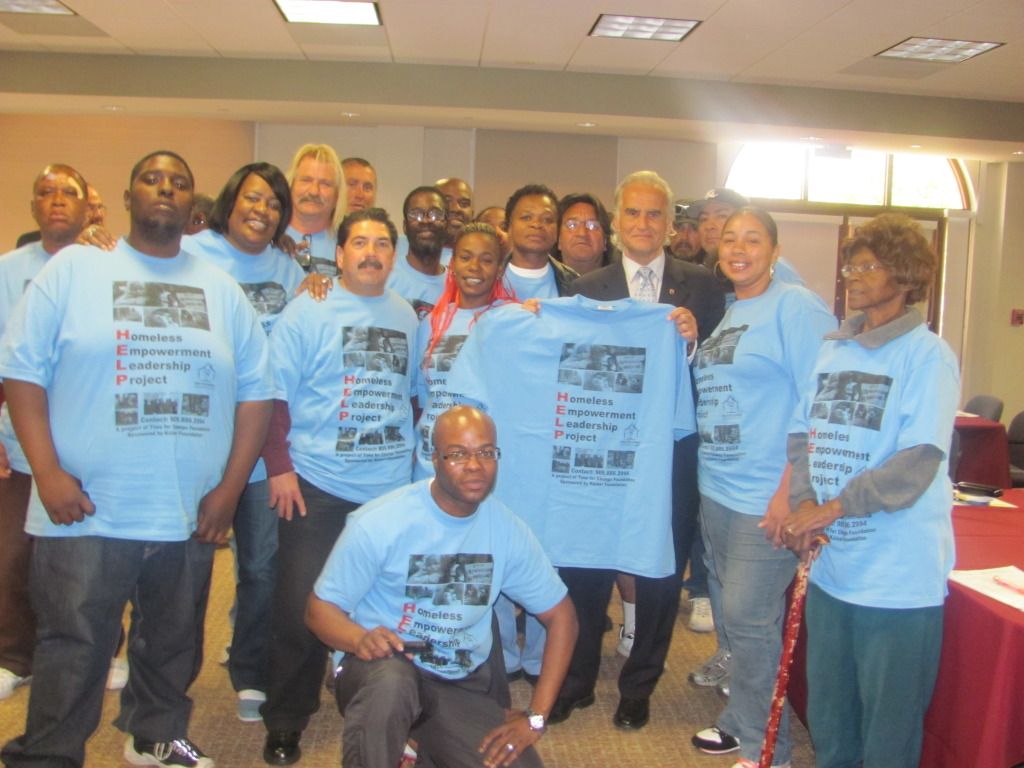
We are excited to announce that through the advocacy efforts of Time for Change Foundation’s Homeless Leadership Empowerment Project (H.E.L.P.), the Housing Authority of San Bernardino County (HASBC) has enacted policy and created procedures that grant housing eligibility to people with past felony convictions. This both protects and enhances public safety, while giving people deserving of a second chance, a fair and equal opportunity to housing (in accordance to standards set by the President and Secretary of the United States Department of Housing and Urban Development).

A key component in the success of the H.E.L.P. was taking homeless individuals and training them to be the solution to the problem. By learning how to stand up and speak out for themselves, they were able to advocate on their own behalf and successfully change the status quo. 

We congratulate the Homeless Empowerment Leadership Project (H.E.L.P.), who did the footwork and research throughout United States, that did in dual purpose meet the needs of individuals in ensuring public safety for public housing. 

It’s a great day in the County of San Bernardino when you have nonprofits working with government agencies to meet the needs of individuals. This is one more testament of the great proactiveness that this county and nonprofits have demonstrated over the past couple of years. We're excited that the Secretary of HUD, under his guise and leadership, made it publicly known that it is okay for the HASBC to allow people with past felony convictions to move back in with their families and reunite them, keeping them whole for people who have turned a new leaf in their life and have become law abiding citizens. 

Sincerely,

Time for Change Foundation


Monday, September 17, 2012

Gov. Jerry Brown Has a Chance to Usher in Major Prison Reforms in California

With a couple strokes of his pen, Gov. Jerry Brown can significantly alter the way California's prison system works.

Yesterday, the state Senate passed a bill that would give parole opportunities to juvenile offenders sentenced to life without the possibility of parole.

This week, that body will likely also vote on a bill that would allow journalists to set up interviews with inmates in state prisons. The prison media access bill has passed through the state legislature eight times over the past couple of decades, and has been vetoed at the governor's desk each time.

Brown, who has paroled inmates at a much higher rate than his two predecessors, has yet to take a public stance on either of these bills.

The juvenile parole bill, proposed by Sen. Leland Yee, a San Francisco Democrat, would allow juvenile offenders to appeal a life sentence after serving 15 years. If the inmate shows remorse and pursues rehabilitation, a court can grant him a parole hearing after his 25th year. Juveniles convicted of torture or killing a cop would not be eligible. There are currently around 300 lifers who could request a parole opportunity if the bill passes.
Yee, who has worked as a child psychologist, argues that because young people's brains are not yet fully developed, they should have the opportunity to prove they are fit for release.
Sen. Joel Anderson, a Republican from San Diego, disagreed that juvenile murderers have the potential to rehabilitate:
"This is absolutely outrageous that we are going to release these little psychopaths back onto the street to murder again," he said, according to the L.A. Times. "We're talking about serious crimes where we have young people who are flat-out evil."
The bill passed 21-16 -- the dissent coming from all 14 Republicans as well as two Democrats.
The prison media access legislation might be just as close. California's Department of Corrections opposes the bill, claiming that inmate interviews can "glamorize" criminals and bring back past trauma to victims. Reporters have been barred from scheduling in-person interviews with inmates since 1996. Instead, prison officials allow 15-minute telephone interviews with inmates who have phone access. Even when reporters gain access inside prisons, they can only speak to the inmates they randomly encounter on guided tours. To the Corrections Department, though, "the media already enjoys a wide range of access to prisons and inmates."
Which is just ridiculous.
As This American Life correspondent Nancy Mullane explained in a Sac Bee op-ed last week:
Let's say an inmate has filed a lawsuit against the state, been injured in a riot, has direct knowledge about criminal conduct or has been involved in a high-profile court case. Reporters can only hope that while they are being escorted by a prison public information officer, they will randomly run into the specific inmate they need for a story.
The bill, pushed by Assemblyman Tom Ammiano (D-San Francisco), would require that prisons, given advanced notice, allow reporters to interview specific inmates as long as it doesn't "pose an immediate and direct threat to the security of the institution or the physical safety of a member of the public." Journalists would be allowed to bring in cameras, notebooks, and recording equipment.
The prison guards union -- the California Correctional Peace Officers Association -- supports the bill. As do media organizations and civil rights groups. Opposition from the Corrections Department and victims-rights groups has kept previous governors from signing off on the legislation.
Follow us on Twitter at @SFWeekly and @TheSnitchSF

California Tries to Guide the Way on Health Law

Members of the audience lined up to speak at a meeting of the California Health Benefit Exchange last month in Sacramento. 

Jerry Brown warns of stark budget cuts

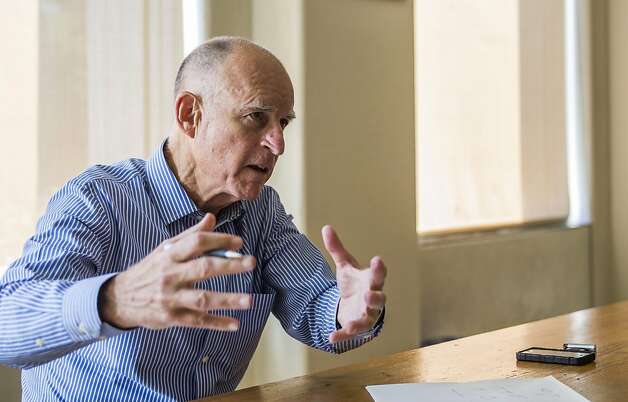
Gov. Jerry Brown says voters need to make a hard choice about how much government they are willing to pay for. Photo: Ken James, SFC / SF

Sacramento --
Gov. Jerry Brown is willing to remake California in his own austere image, but he doesn't think the 37 million people living in the Golden State will like it.

Californians face a "day of reckoning" this November, when they will have to make the hard choice about how much government they are willing to pay for, the governor said Saturday in an interview with The Chronicle.
"There is a lot of magical thinking in Washington and in Sacramento and, maybe, I might even say, Western civilization," he said. "We had it easy and now the moment of truth is upon us. ... We've got to pay for what we want.

"And if we don't want to pay, then we have to deprive ourselves of that which we would like, and it's very hard to get people to make that choice."

Brown said the result of his Proposition 30 initiative on the November ballot will be a "compact between the people and the government" that he will implement.

But voters need to realize that without the new revenue, the cuts needed to get the budget into balance will leave California a very different state.

"I'm ready for austerity, OK?" the former Jesuit seminarian said. "I took vows of poverty, chastity and obedience. I am ready, OK? I don't recommend it, but we will do whatever is needed within the law to balance the budget and do the work of government the best way I can."

Tough decision

The governor's ballot measure, which would raise the sales tax by a quarter cent for four years and the income tax on high earners for seven years, will force that decision.

"I will do everything I can to help people make an intelligent choice, but whatever the people decide, they have decided, and I will be their instrument of execution," he said.

Brown said he plans to raise at least $30 million to promote his initiative, which faces not only opposition from groups that are against any increase in taxes, but also competition from another measure - Proposition 38 - that would raise income tax rates on nearly all Californians and dedicate the money almost entirely to public schools.

The governor said Prop. 38 would not fix the state's budget problems and would be akin to putting icing on a burned cake.

"You can't fool around with the frosting," he said. "You have to deal with the cake."

Because the state's general fund - basically the main checking account to pay for services - provides the bulk of money to public schools, not shoring up the fund will impact schools no matter the outcome of Prop. 38, Brown said.

"If that fund has got a big hole, that hole will show up in every classroom in California," he said. "That's just the way it is, so you've got to fix the budget. My plan is built to help the schools, but also to fix the budget."
Brown's proposal will raise as much as $9 billion per year, according to the Department of Finance, with that money providing money for schools and other state services. Prop. 38 would raise about $10 billion per year for 12 years and require that most of the money be spent on public schools.

For the first four years under Prop. 38, $3 billion of the annual revenue would be dedicated to paying back the state's bond debt, which proponents argue will help the budget. The principal financial backer of the measure, wealthy Southern California civil rights attorney Molly Munger, said Friday that the bond money would help to not "leave anybody in the lurch."

"What we need to do this year is we need to save our public schools, and we need to get out of this budget crisis in a near term way and give us some breathing room on all those big question issues," Munger said.

Getting on the ballot

Holding a public vote on increased taxes and straightening out California's finances have been the paramount objectives of Brown's third term in the governor's office, but he was stymied by Republicans in the Legislature last year. Brown had wanted the Legislature to place the measure on the ballot, but that required a two-thirds vote from lawmakers that never came.

So the governor went another direction, collecting enough signatures to place the measure on the ballot.
If the ballot initiative fails, the famously frugal Brown said he would "fix the budget based on the absence of money."

To illustrate his approach to austerity, he began pointing at objects around his office.
"This is my desk, I paid for it," he said, pounding his fist on a large table. "That desk, I paid for that. ... That little thing belonged to my father. That table, I paid for that, OK? I didn't fix the rug. That's Arnold's rug," he said, pointing at stains on the carpet.

He wondered aloud how he could be any cheaper, adding that he ate a 2-day-old tuna fish sandwich for lunch Friday.

The governor said he would be spending the weekend considering the hundreds of bills that await either his signature or his veto. He bristled when asked what else might be on his agenda during his four-year term, listing a host of objectives he already has started, including a timber harvest plan and expanding oil production in Kern County.

"I'm doing stuff, you know. How much time in the day is there?" he said. "I'm not going to a lot of events. I'm not going to play golf. I'm not going to games. I'm not going to movies. I'm not going to Hawaii. I'm doing stuff."
Wyatt Buchanan is a San Francisco Chronicle staff writer. E-mail: wbuchanan@sfchronicle.com